 Image 1 of 1
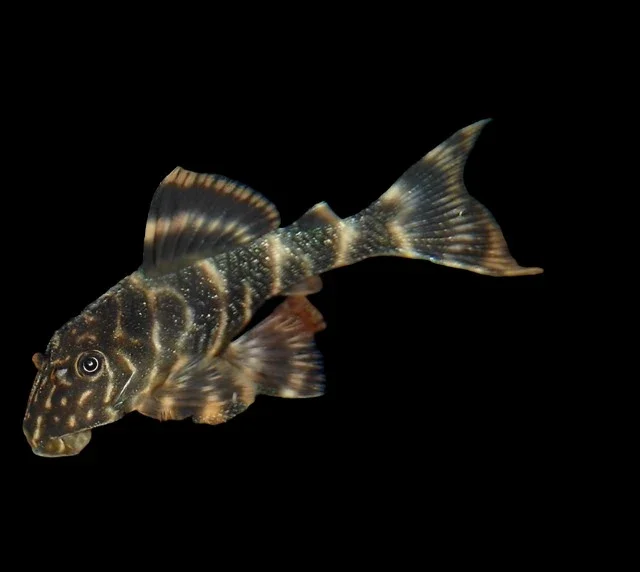
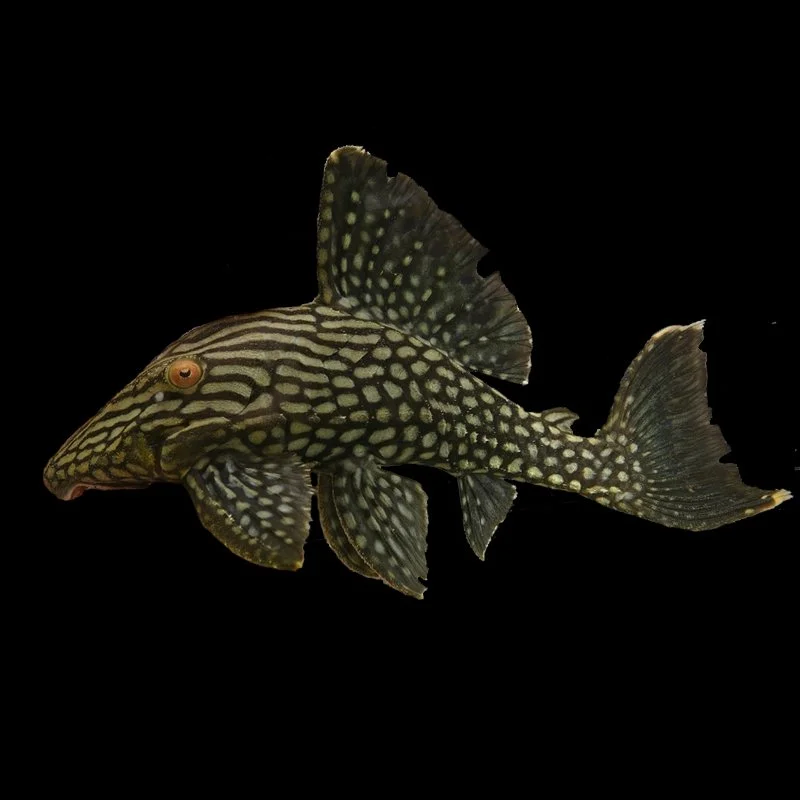
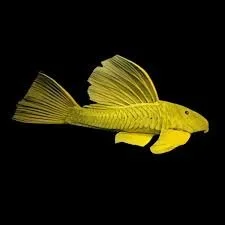
Golden Plecs are popular algae eating suckerfish suitable for most tropical aquariums.
They do grow quite big (up to 30cm long) but despite this they are very peaceful, even to smaller fish.
Largely undemanding, keep them in good water conditions with a pH level from anywhere between 6.0 and 8.0, in an aquarium at least 120cm long.
Set up with strong filtration, moderate lighting and decorate with lots of driftwood, rocks, and tough plants, placed on a gravel or sandy bed.
Can be kept safely with most community fish and central/south American cichlids.
Whilst they will graze on algae, supplement this with a mix of sinking pellets, algae wafers, and frozen tropical foods.
Common name(s):
Golden Plecostomus.
Scientific name:
Hypostomus sp.
Family:
Loricariidae.
L (Loricariidae) Number:
None.
Group:
Armour-plated Catfishes.
Colour:
30cm.
Native habitat:
Widespread in rivers across northeastern parts of South America.
Potential lifespan:
20 years.
Maximum size (approx.):
30cm.
Degree of difficulty to keep:
Easy, perfect for beginners (in the correct sized aquarium).
Swimming level:
Bottom / deep areas.
Breeding:
Egg layer.
Sex:
Not known.
Temperature:
20-28°c.
Water parameters:
pH 6.0-8.0.
Hardness 4-28 °dGH.
Feeding:
Catfish pellets, algae wafers,
Frozen fish foods such bloodworm, tubifex, tropical mix,
Cucumber, spinach, lettuce for a treat.
Minimum aquarium size (when small):
120cm long.
240 litres.
Cohabitation:
Can be kept singly or in a group (if the aquarium is large enough!)
Suitable to keep with most community fish and central/south American cichlids.
Avoid African Rift Lake cichlids as they may pick on the Pleco.
Other tips and information:
Provide good, strong filtration with plenty of water movement.
Regular partial water changes are essential for these fish.
Larger specimens are likely to dig delicate plants up but not eat them. More robust plants such as Amazon Swords, Anubias, and Onion Plants work well with these fish.
These are very popular as they are cheap algae eaters. However, they do grow fast, so if you do not have an aquarium 120cm+ or are not prepared to have a larger fish which doesn’t really move around much during the day you would be better off choosing an alternative, smaller fish such as an Ancistrus species to do the same job.
Golden Plecs are popular algae eating suckerfish suitable for most tropical aquariums.
They do grow quite big (up to 30cm long) but despite this they are very peaceful, even to smaller fish.
Largely undemanding, keep them in good water conditions with a pH level from anywhere between 6.0 and 8.0, in an aquarium at least 120cm long.
Set up with strong filtration, moderate lighting and decorate with lots of driftwood, rocks, and tough plants, placed on a gravel or sandy bed.
Can be kept safely with most community fish and central/south American cichlids.
Whilst they will graze on algae, supplement this with a mix of sinking pellets, algae wafers, and frozen tropical foods.
Common name(s):
Golden Plecostomus.
Scientific name:
Hypostomus sp.
Family:
Loricariidae.
L (Loricariidae) Number:
None.
Group:
Armour-plated Catfishes.
Colour:
30cm.
Native habitat:
Widespread in rivers across northeastern parts of South America.
Potential lifespan:
20 years.
Maximum size (approx.):
30cm.
Degree of difficulty to keep:
Easy, perfect for beginners (in the correct sized aquarium).
Swimming level:
Bottom / deep areas.
Breeding:
Egg layer.
Sex:
Not known.
Temperature:
20-28°c.
Water parameters:
pH 6.0-8.0.
Hardness 4-28 °dGH.
Feeding:
Catfish pellets, algae wafers,
Frozen fish foods such bloodworm, tubifex, tropical mix,
Cucumber, spinach, lettuce for a treat.
Minimum aquarium size (when small):
120cm long.
240 litres.
Cohabitation:
Can be kept singly or in a group (if the aquarium is large enough!)
Suitable to keep with most community fish and central/south American cichlids.
Avoid African Rift Lake cichlids as they may pick on the Pleco.
Other tips and information:
Provide good, strong filtration with plenty of water movement.
Regular partial water changes are essential for these fish.
Larger specimens are likely to dig delicate plants up but not eat them. More robust plants such as Amazon Swords, Anubias, and Onion Plants work well with these fish.
These are very popular as they are cheap algae eaters. However, they do grow fast, so if you do not have an aquarium 120cm+ or are not prepared to have a larger fish which doesn’t really move around much during the day you would be better off choosing an alternative, smaller fish such as an Ancistrus species to do the same job.