 Image 1 of 1
This hardy species needs to be kept in an aquarium at least 120cm long by the time they are fully grown.
Prolific diggers, provide a deep substrate of fine sand (as not to damage their mouths) and create some caves to hide in using rocks and driftwood.
Decorate the set up with hardy, well rooted plants in pots or species attached to the rocks and wood.
Growing up to 25cm in length, they can be kept singly, as pairs or in small groups within most large-sized fish community and cichlid tanks.
Feed a mix of pellets, and frozen tropical foods.
Common name(s):
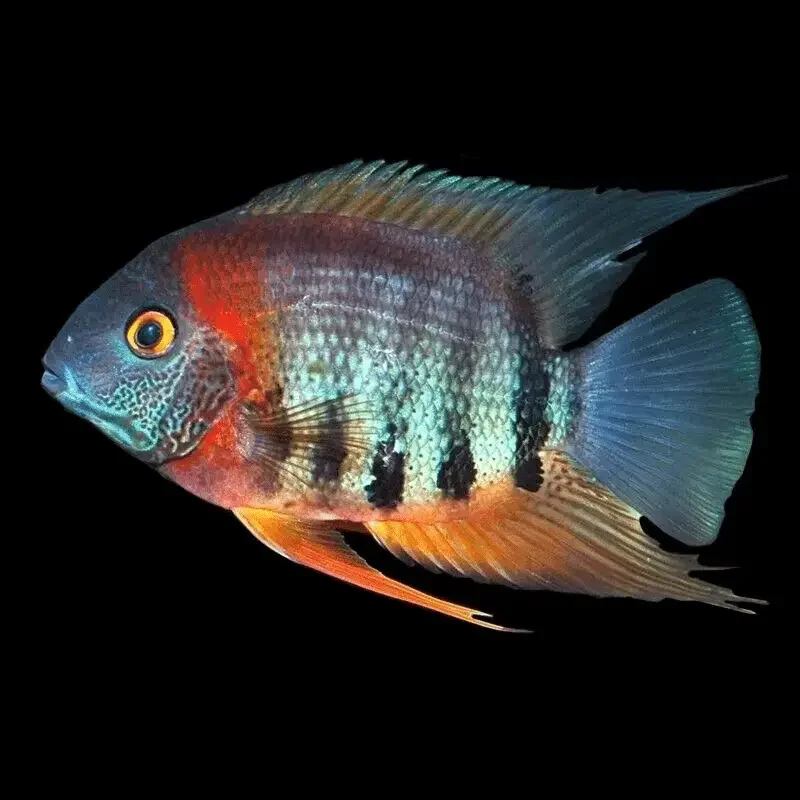
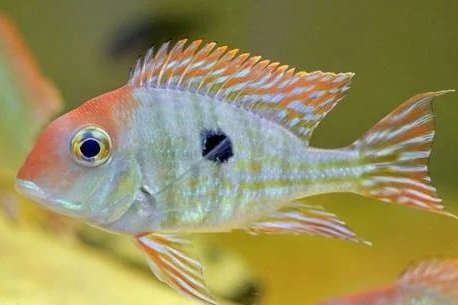
Red Head Tapajos.
Scientific name:
Geophagus sp. tapajos.
Other names:
Geophagus pyrocephalus.
Family:
Cichlidae.
Colour:
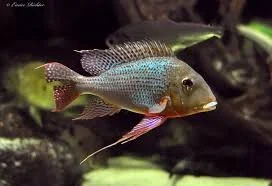
Gold, green, orange, red, black.
Native habitat:
Rio Tapajos, eastern Brazil.
Potential lifespan:
up to 6 years.
Maximum size (approx.):
25cm.
Degree of difficulty to keep:
For more experienced fishkeepers.
Swimming level:
Bottom / deep areas.
Breeding:
Egg layer, mouthbrooder.
Sex:
Male is larger and has a more pointed end to the dorsal fin (females are noticeably rounded).
Some dominant males develop a nuchal hump as they mature.
Females are slightly lighter in colouration.
Temperature:
23-30°c.
Water parameters:
pH 4.5 to 7.5.
Hardness up to 10°dGH.
Feeding:
Mix of cichlid pellets, and frozen tropical foods including Bloodworm, Tubifex and Brine Shrimp.
Offer some chopped earthworms as a treat.
Minimum aquarium size:
120cm long.
240 litres.
Cohabitation:
Can be kept either singly, as pairs or in small groups if the aquarium is large enough.
If keeping a group, it may be best to only keep them with large, non-predatory catfish.
Will be aggressive and territorial when breeding.
Suitable to keep with other fish of similar temperament such as other Geophagus, Parrot fish and Oscars.
Can also be kept with some large community fish that are too big to fit in their mouth, but the community fish must be introduced to the aquarium first.
Other tips and information:
Provide good filtration with plenty of oxygen.
Maintain good water quality with plenty of regular water changes.
Keep nitrate levels low, under 30ppm.
Territorial, protective and aggressive when breeding.
They do like to dig, having deep sand will benefit them.
This hardy species needs to be kept in an aquarium at least 120cm long by the time they are fully grown.
Prolific diggers, provide a deep substrate of fine sand (as not to damage their mouths) and create some caves to hide in using rocks and driftwood.
Decorate the set up with hardy, well rooted plants in pots or species attached to the rocks and wood.
Growing up to 25cm in length, they can be kept singly, as pairs or in small groups within most large-sized fish community and cichlid tanks.
Feed a mix of pellets, and frozen tropical foods.
Common name(s):
Red Head Tapajos.
Scientific name:
Geophagus sp. tapajos.
Other names:
Geophagus pyrocephalus.
Family:
Cichlidae.
Colour:
Gold, green, orange, red, black.
Native habitat:
Rio Tapajos, eastern Brazil.
Potential lifespan:
up to 6 years.
Maximum size (approx.):
25cm.
Degree of difficulty to keep:
For more experienced fishkeepers.
Swimming level:
Bottom / deep areas.
Breeding:
Egg layer, mouthbrooder.
Sex:
Male is larger and has a more pointed end to the dorsal fin (females are noticeably rounded).
Some dominant males develop a nuchal hump as they mature.
Females are slightly lighter in colouration.
Temperature:
23-30°c.
Water parameters:
pH 4.5 to 7.5.
Hardness up to 10°dGH.
Feeding:
Mix of cichlid pellets, and frozen tropical foods including Bloodworm, Tubifex and Brine Shrimp.
Offer some chopped earthworms as a treat.
Minimum aquarium size:
120cm long.
240 litres.
Cohabitation:
Can be kept either singly, as pairs or in small groups if the aquarium is large enough.
If keeping a group, it may be best to only keep them with large, non-predatory catfish.
Will be aggressive and territorial when breeding.
Suitable to keep with other fish of similar temperament such as other Geophagus, Parrot fish and Oscars.
Can also be kept with some large community fish that are too big to fit in their mouth, but the community fish must be introduced to the aquarium first.
Other tips and information:
Provide good filtration with plenty of oxygen.
Maintain good water quality with plenty of regular water changes.
Keep nitrate levels low, under 30ppm.
Territorial, protective and aggressive when breeding.
They do like to dig, having deep sand will benefit them.