 Image 1 of 1
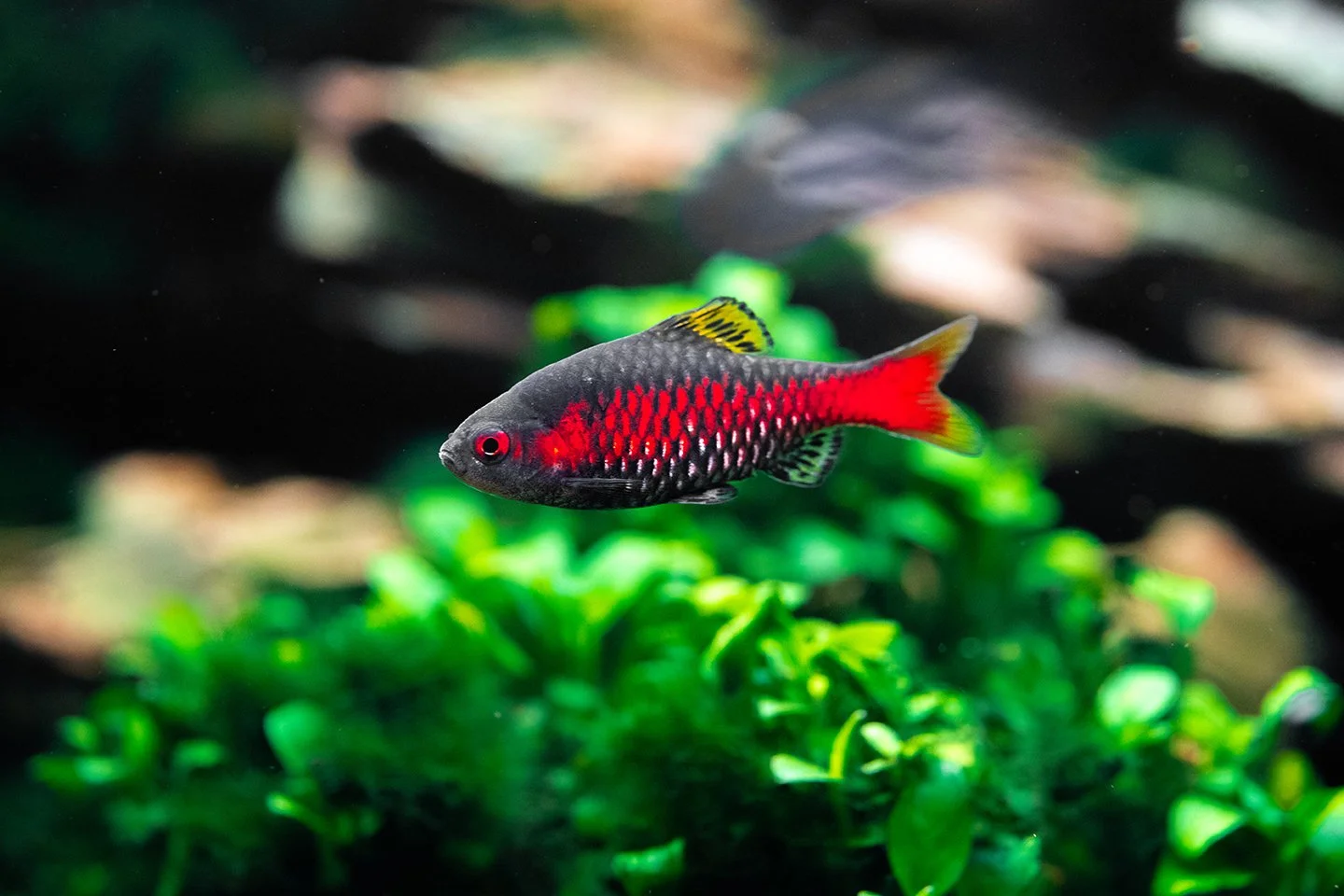
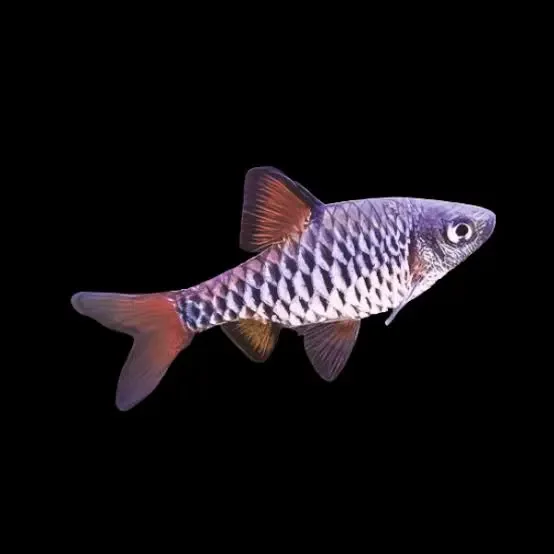
An excellent choice for nano and small community aquariums, the Checkered Barb is a peaceful and interesting fish. The distinct black and silver patterning on their scales helps this species stand out in any set up. Barbs can have a reputation for being fin nippers, but these ones are definitely not. Very hardy, these are quite robust making them a good choice for novice aquarists. Provide a moderately planted tank, using some bushy varieties such as Cabomba or Ambulia, and some floating plants with some open swimming space. Growing up to 5cm, these need to be kept an aquarium at least 40cm long and will tolerate a pH level of anywhere between 6.5 and 7.5. Keep with other peaceful fish and feed a mix of flakes, granules, and frozen tropical foods.
Common name(s):
Checkered Barb.
Island Barb.
Scientific name:
Barbus oligolepis.
Other names:
Oliotius oligolepis.
Family:
Cyprinidae.
Group:
Carp-like fishes.
Colour:
Black and bright silver bodies.
Males have red/brown and black fins, with females being lighter.
Native habitat:
Lakes, streams and rivers in Indonesia and Sumatra.
Potential lifespan:
8 years.
Maximum size (approx.):
5cm.
Degree of difficulty to keep:
Easy, perfect for beginners.
Swimming level:
Mid-water.
Bottom / deep areas.
Breeding:
Egg layer.
Sex:
Males are brighter in colouration with sharp, black edged, red/brown fins.
Females look faded by comparison.
Temperature:
20-26°c
Water parameters:
pH 6.5 - 7.5,
hardness 18°dGH.
Feeding:
Tropical flakes, slow sinking granules,
Frozen foods such as bloodworms, daphnia, brine shrimp and small live foods.
Minimum aquarium size:
40cm long.
40 litres.
Cohabitation:
Best kept in groups of at least 6.
Suitable to keep with most active and peaceful community fish such as other Barbs, Gourami’s, Angelfish, Guppies, Neon Tetra’s, small cichlids etc.
Other tips and information:
Provide good filtration and carry out regular water changes.
An excellent choice for nano and small community aquariums, the Checkered Barb is a peaceful and interesting fish. The distinct black and silver patterning on their scales helps this species stand out in any set up. Barbs can have a reputation for being fin nippers, but these ones are definitely not. Very hardy, these are quite robust making them a good choice for novice aquarists. Provide a moderately planted tank, using some bushy varieties such as Cabomba or Ambulia, and some floating plants with some open swimming space. Growing up to 5cm, these need to be kept an aquarium at least 40cm long and will tolerate a pH level of anywhere between 6.5 and 7.5. Keep with other peaceful fish and feed a mix of flakes, granules, and frozen tropical foods.
Common name(s):
Checkered Barb.
Island Barb.
Scientific name:
Barbus oligolepis.
Other names:
Oliotius oligolepis.
Family:
Cyprinidae.
Group:
Carp-like fishes.
Colour:
Black and bright silver bodies.
Males have red/brown and black fins, with females being lighter.
Native habitat:
Lakes, streams and rivers in Indonesia and Sumatra.
Potential lifespan:
8 years.
Maximum size (approx.):
5cm.
Degree of difficulty to keep:
Easy, perfect for beginners.
Swimming level:
Mid-water.
Bottom / deep areas.
Breeding:
Egg layer.
Sex:
Males are brighter in colouration with sharp, black edged, red/brown fins.
Females look faded by comparison.
Temperature:
20-26°c
Water parameters:
pH 6.5 - 7.5,
hardness 18°dGH.
Feeding:
Tropical flakes, slow sinking granules,
Frozen foods such as bloodworms, daphnia, brine shrimp and small live foods.
Minimum aquarium size:
40cm long.
40 litres.
Cohabitation:
Best kept in groups of at least 6.
Suitable to keep with most active and peaceful community fish such as other Barbs, Gourami’s, Angelfish, Guppies, Neon Tetra’s, small cichlids etc.
Other tips and information:
Provide good filtration and carry out regular water changes.