 Image 1 of 1
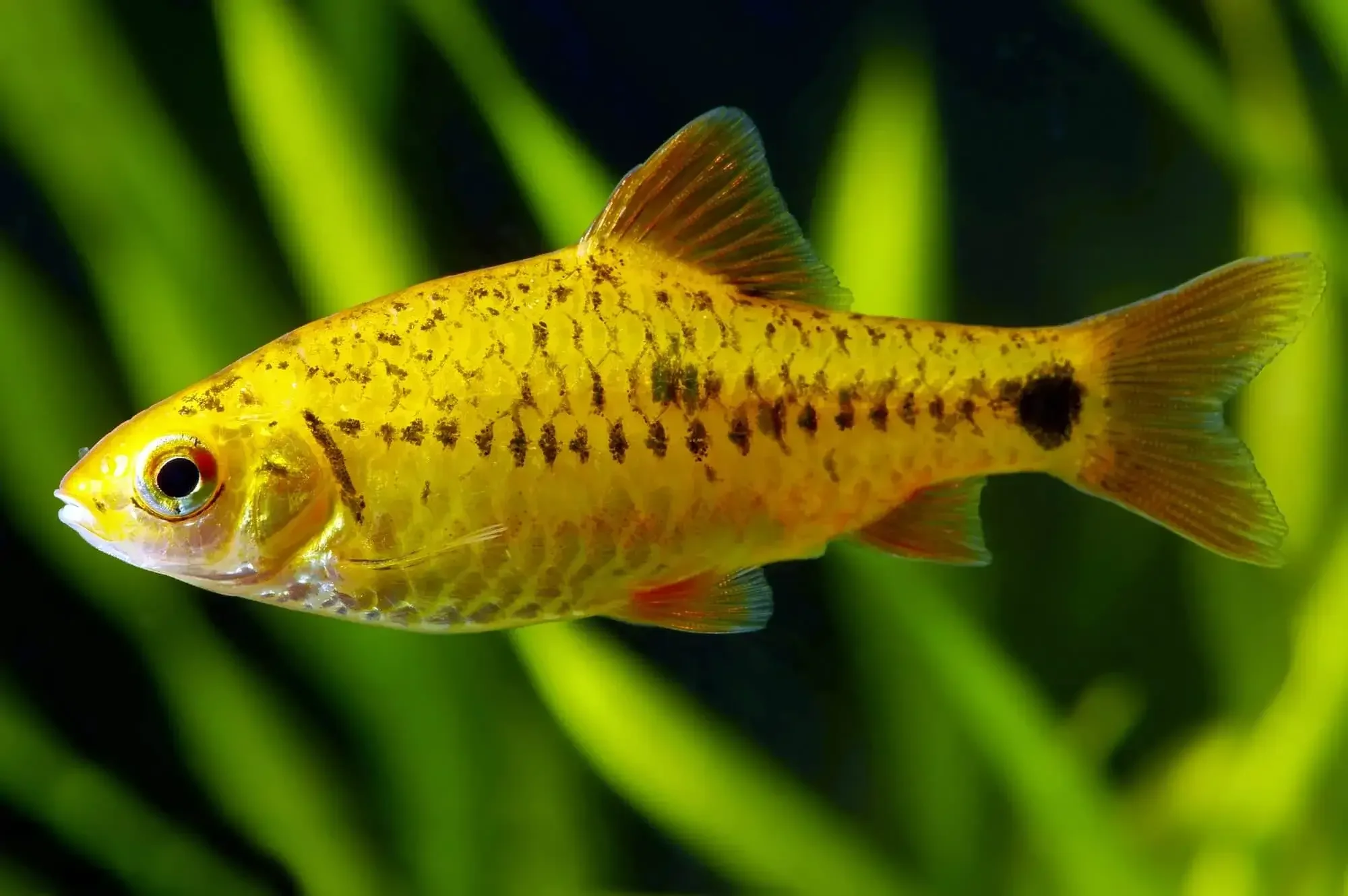
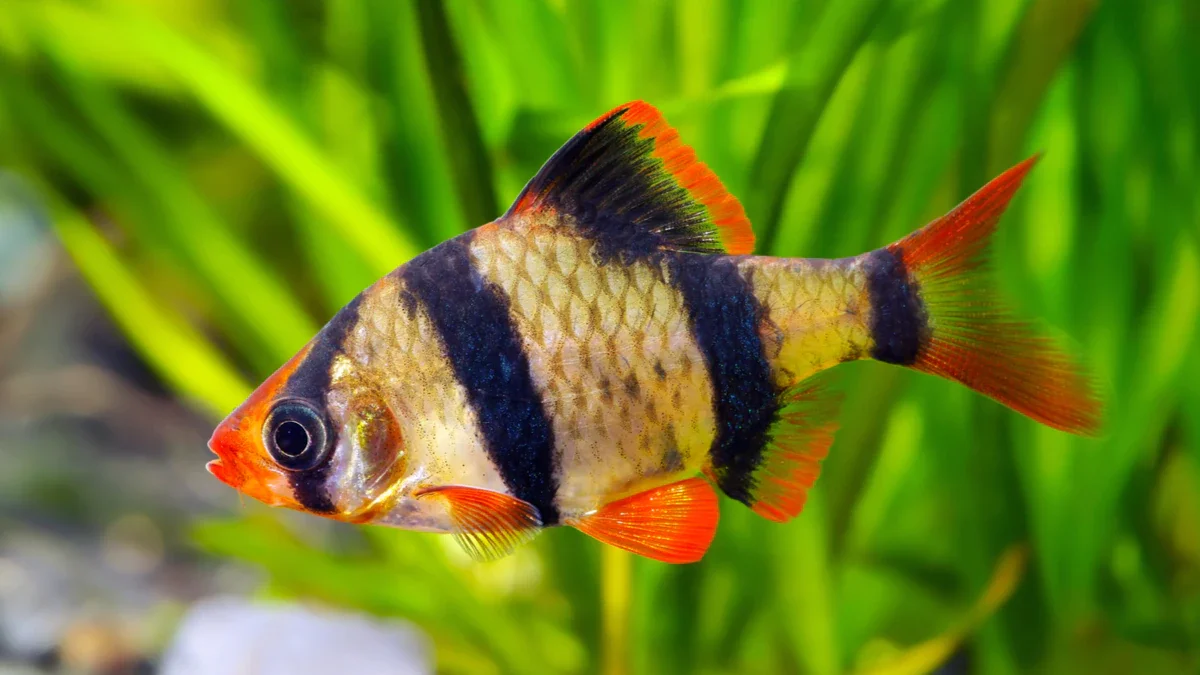
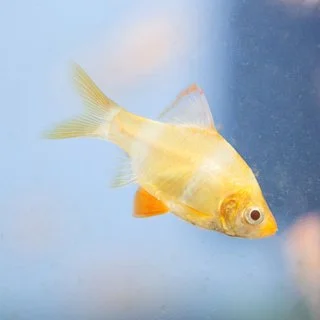
The Albino form of they very well-known Tiger Barb. Very popular and attractive, these are best kept in aquariums with lots of other very active fish, such as other Barbs, Danios, Rainbow fish and even cichlids. Barbs have a reputation for being fin-nippers, and it can be true of these too. The secret is to keep lots of them, at least 6 if not more and they will spend most of their time maintaining their own pecking order than to worry about other fish. Recommended for aquariums at least 60cm long, with plenty of plants and good water movement. Feed a mix of tropical flakes, fine granules, and live or frozen foods. Perfect for all 'busy' community aquariums.
Common name(s):
Albino Tiger Barb
Scientific name:
Barbus tetrazona
Other names:
Puntius tetrazona
Family:
Cyprinidae.
Group:
Carp-like fishes.
Colour:
yellow/pink ‘albino’ with white/light stripes and red/orange fins.
Native habitat:
Borneo, Indonesia, Sumatra.
Potential lifespan:
4 to 7 years.
Maximum size (approx.):
7cm
Degree of difficulty to keep:
For slightly more experienced fishkeepers.
Swimming level:
Mid-water.
Breeding:
Egg layer.
Sex:
Males are smaller and brighter in colouration,
Females are plumper and look faded by comparison.
Temperature:
20-26°c
Water parameters:
pH 6.5 - 7.5,
Hardness 18°dGH.
Feeding:
Tropical flakes, slow sinking granules,
Frozen foods such as bloodworms, daphnia, brine shrimp and small live foods.
Minimum aquarium size:
60cm long.
54 litres.
Cohabitation:
Best kept in groups of at least 6, but preferably more. Keeping less will risk them harassing other fish.
They will quite happily and safely live with other active fish such as Barbs, Danios, Rainbowfish, Rasboras, Tetras, and cichlids.
Avoid keeping them with Guppies, Bettas, Angelfish, and any other similar fish with flowing finnage. They are likely to get nipped occasionally which can lead to fin rot or fungal infections.
The Albino form of they very well-known Tiger Barb. Very popular and attractive, these are best kept in aquariums with lots of other very active fish, such as other Barbs, Danios, Rainbow fish and even cichlids. Barbs have a reputation for being fin-nippers, and it can be true of these too. The secret is to keep lots of them, at least 6 if not more and they will spend most of their time maintaining their own pecking order than to worry about other fish. Recommended for aquariums at least 60cm long, with plenty of plants and good water movement. Feed a mix of tropical flakes, fine granules, and live or frozen foods. Perfect for all 'busy' community aquariums.
Common name(s):
Albino Tiger Barb
Scientific name:
Barbus tetrazona
Other names:
Puntius tetrazona
Family:
Cyprinidae.
Group:
Carp-like fishes.
Colour:
yellow/pink ‘albino’ with white/light stripes and red/orange fins.
Native habitat:
Borneo, Indonesia, Sumatra.
Potential lifespan:
4 to 7 years.
Maximum size (approx.):
7cm
Degree of difficulty to keep:
For slightly more experienced fishkeepers.
Swimming level:
Mid-water.
Breeding:
Egg layer.
Sex:
Males are smaller and brighter in colouration,
Females are plumper and look faded by comparison.
Temperature:
20-26°c
Water parameters:
pH 6.5 - 7.5,
Hardness 18°dGH.
Feeding:
Tropical flakes, slow sinking granules,
Frozen foods such as bloodworms, daphnia, brine shrimp and small live foods.
Minimum aquarium size:
60cm long.
54 litres.
Cohabitation:
Best kept in groups of at least 6, but preferably more. Keeping less will risk them harassing other fish.
They will quite happily and safely live with other active fish such as Barbs, Danios, Rainbowfish, Rasboras, Tetras, and cichlids.
Avoid keeping them with Guppies, Bettas, Angelfish, and any other similar fish with flowing finnage. They are likely to get nipped occasionally which can lead to fin rot or fungal infections.